
The UX and SEO Partnership: How Great User Experience Drives E-commerce Growth
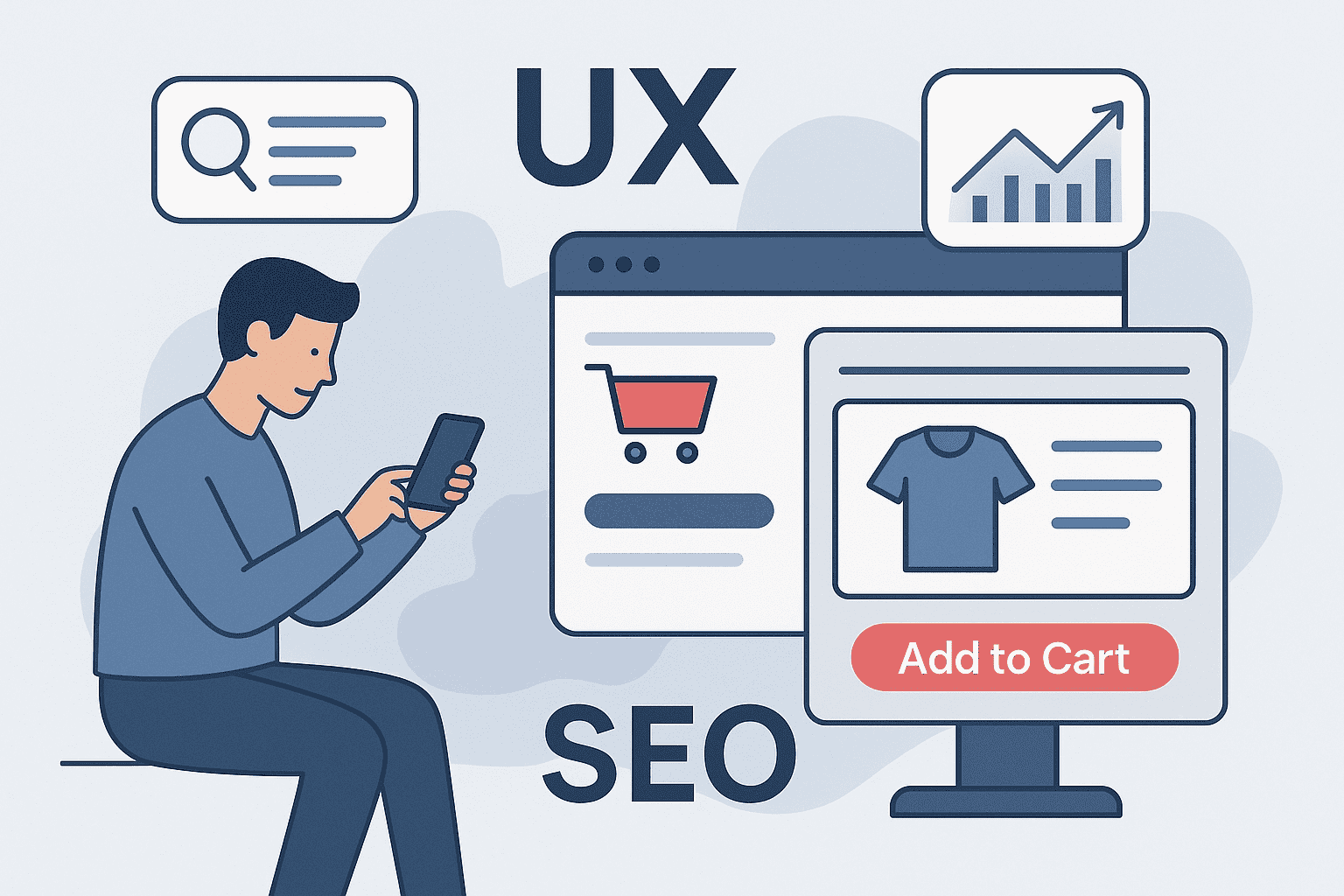
In today’s competitive digital landscape, a great user experience (UX) is no longer a luxury for e-commerce businesses—it’s a necessity. A well-designed UX makes navigating your site feel effortless, turns browsing into a comfortable shopping experience, and encourages users to stay longer. When customers find your website easy to use, they are more likely to explore products, add items to their cart, and build long-term brand loyalty. This positive user behavior directly improves your site performance metrics, such as bounce rate and session duration, ultimately contributing to your e-commerce SEO efforts.
Beyond user satisfaction, a well-designed UX is a powerful catalyst for improved SEO. Search engines like Google prioritize websites that offer a smooth, user-friendly experience, rewarding them with higher rankings. Core UX elements—such as mobile responsiveness, fast load times, and well-structured content—are now critical factors that directly impact your search visibility and play a vital role in enhancing your e-commerce SEO. Many businesses now invest in e-commerce development services to align their UX and SEO strategies. By doing so, e-commerce brands can attract more qualified organic traffic and increase their conversion rates.
The Synergistic Connection Between UX and User Engagement
User experience (UX) and user engagement are two sides of the same coin. When a website is intuitive and easy to use, visitors feel comfortable and are more likely to stay longer. Simple navigation, clear call-to-action (CTA) buttons, and fast-loading pages make it easy for people to find exactly what they need. This seamless experience makes users more likely to interact, browse, and ultimately, make a purchase.
A great UX design builds trust and encourages repeat visits. When customers enjoy using your site, they are more likely to return and recommend it to others. Incorporating clean layouts, high-quality images, and supportive features creates a positive emotional connection with your brand. In short, better UX leads to happier, more engaged users.
Key UX Elements That Drive Engagement & SEO
A well-designed e-commerce website uses specific UX elements to captivate visitors, streamline navigation, and increase the likelihood of a purchase.
- Effortless Navigation: When users can easily find what they’re looking for, they spend more time on your site, leading to increased engagement and overall user satisfaction. Clear menus, logical categories, and breadcrumb trails guide users without confusion. Smooth navigation builds confidence and keeps users moving from one product page to the next.
- Lightning-Fast Loading Speed: Slow websites drive users away within seconds. A fast-loading site not only improves the shopping experience but also significantly reduces bounce rates. Quick pages keep users engaged and increase the likelihood of a purchase. Google’s Core Web Vitals, a key SEO ranking factor, heavily rewards sites with fast load times.
- Mobile-First Design: With the majority of online shopping happening on smartphones, a responsive and mobile-friendly design is non-negotiable. A mobile-first approach ensures your website adapts perfectly to various screen sizes, maintaining a clean and functional design. This allows users to shop easily, regardless of the device they’re using.
- Clear Call-to-Action (CTA) Buttons: Effective CTAs grab attention and guide users toward important actions, such as “Add to Cart” or “Checkout.” These buttons should be visually distinct, easy to read, and strategically placed to ensure optimal visibility. A strong CTA helps users take the next step without hesitation, boosting your conversion rate.
- Powerful Search Functionality: Features like filters, sorting options, and an advanced search bar save users time and deliver accurate results. When customers can quickly find products that match their needs, they are more likely to stay and make a purchase. A great search experience reduces frustration and maintains high satisfaction.
How UX Directly Impacts SEO Performance
User experience (UX) now plays a pivotal role in how search engines rank websites. Google and other search engines are heavily focused on user behavior signals, not just keywords. If users spend more time on your site, visit multiple pages, and don’t “bounce” quickly, it signals to Google that your website provides value. A superior UX helps generate these positive signals.
The major UX elements that influence SEO are:
- Page Speed: A fast-loading site enhances user satisfaction and is a direct factor in search ranking.
- Mobile Responsiveness: A website that functions well on mobile devices is crucial for ranking, particularly with Google’s mobile-first indexing.
- Easy Navigation: A clear site structure and logical navigation allow search engine crawlers to easily index your site’s content, which is crucial for visibility.
Good UX also enhances content readability and structure, making it easier for search engines to understand your site. Clear headings, proper formatting, and strategic internal linking all help enhance crawling and indexation. All these factors work together to improve your website’s ranking and attract more organic traffic.
Optimizing for a Better User Experience and SEO
- Reduce Bounce Rate: A high bounce rate often indicates that users are leaving your website quickly. Smart UX design makes your site more inviting and easier to use. When users land on a fast-loading page with a clean layout, they’re more likely to stay and explore.
- Improve Site Speed: Use tools like Google PageSpeed Insights to identify and fix speed issues. Optimize images, minify CSS and JavaScript, and utilize browser caching to enhance your site’s loading speed.
- Enhance Navigation: Ensure your main navigation menu is simple and descriptive. Use a mega menu for larger e-commerce sites to effectively organize categories. Implement a prominent search bar and use filters to help users narrow down their options.
- Mobile-First Design: If you haven’t already, ensure your website is built with a mobile-first approach. This ensures a seamless experience across all devices and provides a significant boost to your SEO.
Conclusion
Smart UX design is no longer just a bonus—it’s a fundamental requirement for e-commerce success. By creating a user-friendly experience, you keep visitors engaged, reduce bounce rates, and encourage repeat visits. Many businesses choose to hire eCommerce developer experts to craft these seamless digital experiences. At the same time, strong UX practices directly improve your SEO by satisfying key search engine criteria. When UX and SEO work together in harmony, your e-commerce store is perfectly positioned to attract more organic traffic, retain customers, and significantly increase conversions.

Sanjit Mandal
With over two decades of experience in marketing, spanning back to 1997, he has dedicated nearly 20 years to assisting businesses in optimizing their marketing investments for optimal returns. Presently, he holds the position of owner at California SEO Professionals, a digital marketing firm specializing in result-oriented strategies tailored to fuel business expansion. Additionally, boasting a 5th-degree black belt in Goju Ryu Karate, acquired through nearly 30 years of disciplined training, his commitment to excellence is evident in every aspect of his endeavors. 🥋